
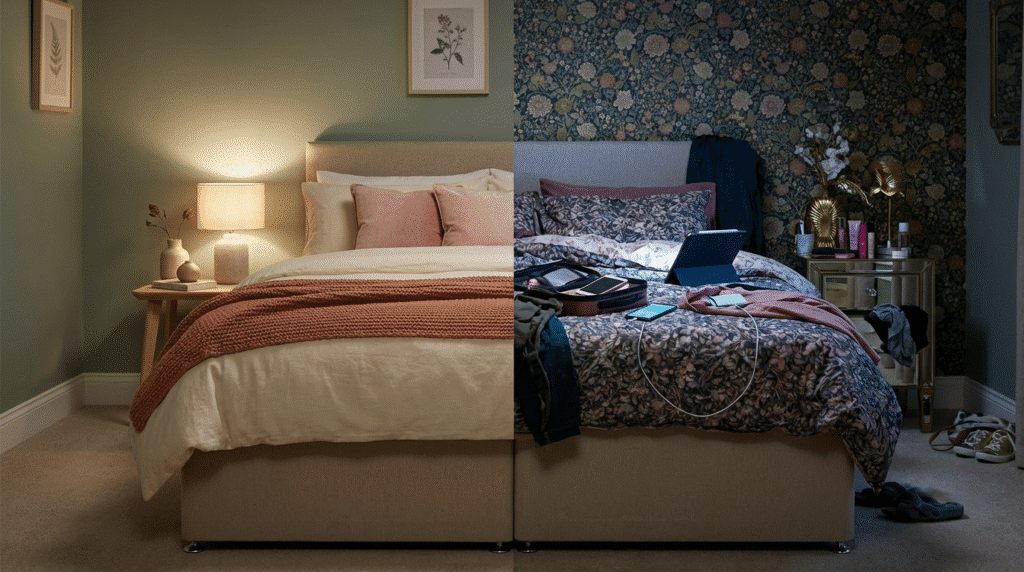
Most people think poor sleep comes down to stress, screens, late nights or the wrong mattress. Clutter rarely makes the list, but it should. A messy or visually busy bedroom disrupts sleep more than people realise.
Your brain is constantly scanning your environment for signals. A chaotic bedroom tells your brain there is still work to do. A tidy one tells it the day is over. This is why the state of your space directly affects how quickly and deeply you sleep.
Here is how clutter impacts your brain, your stress levels, and your sleep quality, and how a simple five-minute habit can help you rest far more easily.
Why your brain reacts to clutter
The brain likes order. It has to process what it sees, even when you are not paying attention to it. When your bedroom is full of piles, laundry, half-finished tasks or general “bits”, your brain stays in alert mode.
This alertness delays melatonin release, increases heart rate, and keeps your mind turning over things you have not done yet. None of this helps sleep.
Clutter and stress are directly linked
Studies show that clutter increases cortisol, the body’s main stress hormone. Higher cortisol equals a busier mind. A busier mind equals a harder time switching off. It does not matter if the clutter is small. Your brain still registers it.
A tidy bedroom helps reduce the mental load you carry into the night.
Your bedroom should act as a cue for rest
Think of your bedroom like a signal. When it is calm and organised, your brain understands the cue: time to slow down. When it is messy, the cue gets interrupted.
You do not need a minimal show home. You simply need a space that feels settled, not chaotic.
The five-minute fix before bed
Instead of overhauling your entire room, try this simple approach:
– put clothes in a laundry basket
– clear bedside tables
– straighten bedding
– put random items back in place
– remove daytime distractions like bags or paperwork
Five minutes is enough to create a noticeable shift in how you feel when you get into bed.
How your sleep environment links with comfort
A tidy room sets the scene. Your mattress then determines what happens next. If your mattress causes pressure points, overheating, or discomfort, you will still toss and turn even in a calm environment.
Sleep is a combination of mind and body cues. When both work together, your nights feel easier.
Try a simple reset tonight
Before bed, do a five-minute tidy, lower lights, and keep your room cool. You may be surprised by how much calmer you feel once the space around you feels calm too.