

What is sleep inertia? It is the temporary grogginess, disorientation and reduced mental or physical performance that can follow waking. A new study of older adults found that more severe sleep inertia was associated with recurrent falls. It did not prove that sleep inertia caused those falls, but it suggests that how someone feels and functions just after waking deserves more attention.
The research was published in SLEEP Advances on 29 September 2026. It used data from the long-running Wisconsin Sleep Cohort and compared questionnaire scores for sleep inertia and daytime sleepiness with falls reported over the previous year.
Evidence checked: 5 October 2026. This article is based on the peer-reviewed accepted manuscript, established sleep-inertia research, NHS falls guidance and NHS guidance on excessive daytime sleepiness.
The 2026 sleep inertia study at a glance
- Study group: 392 older adults were included in the recurrent-falls analysis. Their average age was 74.5 and 44.9 per cent were women.
- Sleep measures: participants completed the Sleep Inertia Questionnaire and Epworth Sleepiness Scale.
- Falls measures: participants reported falls and fall-related injuries during the previous year.
- Main result: after full adjustment, elevated sleep inertia was associated with twice the odds of recurrent falls.
- Important distinction: daytime sleepiness was not independently associated with recurrent falls after full adjustment.
- Main limitation: this cross-sectional analysis used questionnaires and recalled falls, so it cannot establish cause and effect.
What does sleep inertia feel like?
Sleep inertia is the transition period between sleep and full wakefulness. It can involve slow thinking, poor concentration, disorientation, heavy limbs, low motivation and reduced coordination. It is different from simply wanting more sleep later in the day.
The effect is usually strongest immediately after waking and then fades. Research has found wide variation between people and situations. It may last only a few minutes, but some studies have detected reduced performance for much longer. Sleep loss, waking during the biological night and waking from deeper sleep can make it more pronounced.
That distinction matters. Daytime sleepiness is a tendency to fall asleep or struggle to stay awake during the day. Sleep inertia is specifically the impaired transition just after waking. A person can experience one without the other.
What did the researchers find?
The researchers defined elevated sleep inertia as a score above 37 on the Sleep Inertia Questionnaire. Recurrent falls meant two or more falls during the previous year. In the fully adjusted analysis, elevated sleep inertia was associated with an odds ratio of 2.00 for recurrent falls, with a 95 per cent confidence interval from 1.07 to 3.73.
In plain English, the elevated-inertia group had twice the odds of reporting recurrent falls compared with the lower-inertia group after the researchers accounted for a range of demographic, sleep, psychiatric, medical, physical and cognitive factors. An odds ratio is not the same as saying someone is twice as likely to fall, and it does not prove that grogginess caused a fall.
Among the 162 people who reported at least one fall, sleep inertia was linked with injurious falls in simpler analyses. That association was no longer statistically significant after full adjustment. Daytime sleepiness also showed no independent association with recurrent or injurious falls in the fully adjusted models.
The questionnaire’s physical symptoms were most strongly associated with recurrent falls. Cognitive symptoms were most strongly associated with injurious falls. Those secondary findings are useful leads for future research, not a diagnostic test for an individual.
Why can waking be a vulnerable moment?
Moving safely after waking combines several jobs. The brain must orient itself, vision must adjust to the light, balance must stabilise and muscles must respond. Someone may also be dealing with pain, poor eyesight, low blood pressure on standing, medication effects or an urgent trip to the bathroom.
The new study does not show which of these factors explains the association. It does show why repeated severe grogginess should not automatically be dismissed as an unavoidable part of ageing.
Sleep inertia can also matter after a daytime nap or an unexpected night waking. Waking from a nap and immediately driving, using stairs or making a safety-critical decision may leave no time for alertness and coordination to recover.
What the study cannot tell us
- It cannot prove causation: sleep inertia may contribute to risk, but health conditions or other factors could influence both waking symptoms and falls.
- It did not observe falls as they happened: participants recalled events from the previous year.
- It did not measure waking performance objectively: sleep inertia was assessed by questionnaire.
- It does not provide a treatment: the authors call for longitudinal research using objective measures.
- It does not make every groggy morning dangerous: occasional brief sleep inertia is common.
Practical steps for a safer waking routine
No single routine has been proven to remove fall risk. The sensible response is to combine established falls-prevention advice with awareness that alertness may be temporarily reduced after waking.
- Do not rush: NHS falls guidance recommends taking time when getting out of bed or a chair. Sit up, stand carefully and establish your balance before walking.
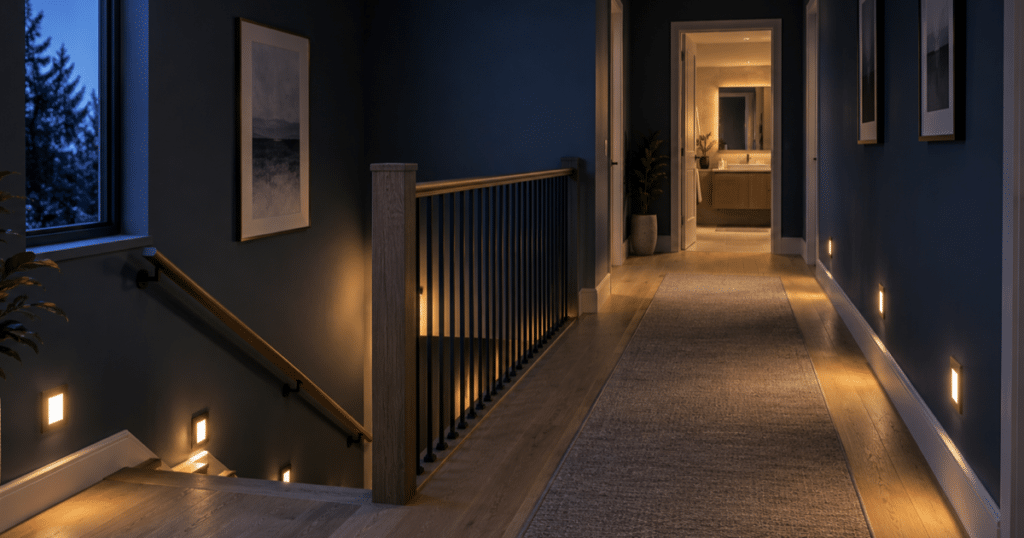
- Make the route visible: keep a bedside light within reach and make sure the path to the bathroom, hallway and stairs is well lit.
- Remove trip hazards: keep floors clear and address loose rugs, trailing wires and unstable furniture.
- Use appropriate support: keep prescribed walking aids accessible and use secure handrails where needed.
- Wear secure footwear: supportive, well-fitting shoes or slippers are safer than loose or backless footwear.
- Review wider risks: dizziness, vision changes, balance problems and medicines that cause drowsiness need discussion with a GP, pharmacist or other appropriate clinician.
Do not stop or change prescribed medicine without professional advice. If you have fallen, feel unsteady or worry about falling, ask a GP or local falls service for an individual assessment.
When should sleepiness or difficult waking be checked?
Speak to a GP if you frequently fall asleep during the day or sleepiness is affecting your life. Persistent or severe difficulty waking can also deserve assessment, particularly when it appears alongside loud snoring, gasping, witnessed pauses in breathing, sudden sleep attacks, confusion, dizziness, new medication or recent falls.
A clinician can look beyond sleep duration. Possible contributors include sleep disorders, medicines, mood, pain, neurological conditions, cardiovascular issues and disrupted sleep. A wearable score cannot make that assessment.
What does this mean for the sleep environment?
A mattress cannot prevent a fall, eliminate sleep inertia or treat excessive daytime sleepiness. It can only influence part of the sleep environment.
A suitable sleep surface may help reduce avoidable discomfort, pressure and overheating that disturb sleep. Bed height, room layout, lighting and clear access around the bed are separate practical considerations, especially for anyone with limited mobility or a history of falls.
For more on the underlying sleep process, explore HIGGYS guides to the four stages of sleep, circadian rhythm and sleep deprivation.
Frequently asked questions about sleep inertia
Is sleep inertia normal?
Brief grogginess after waking is common. Severity and duration vary. Repeated, prolonged or disabling difficulty waking, especially with daytime sleepiness or falls, is worth discussing with a healthcare professional.
How long does sleep inertia last?
It is usually strongest immediately after waking and often improves within minutes. Research has detected impairment for longer in some circumstances, including after sleep loss or waking during the biological night.
Does waking from deep sleep cause sleep inertia?
Waking from deep sleep can increase sleep inertia, but it is not the only factor. Sleep loss, time of day, individual differences and the reason for waking can also matter.
Did the new study prove sleep inertia causes falls?
No. It found an association between elevated sleep inertia and recurrent falls after statistical adjustment. The cross-sectional design, questionnaires and recalled falls cannot establish which came first or prove causation.
Is sleep inertia the same as daytime sleepiness?
No. Sleep inertia is impaired alertness and performance during the transition after waking. Daytime sleepiness is difficulty staying awake or a tendency to fall asleep during the day.
Can a mattress reduce sleep inertia or prevent falls?
No mattress can make that claim. A suitable mattress may support comfort and reduce avoidable disturbance, but sleep inertia and falls have many possible contributors that require broader practical and clinical attention.
References
- Cook JD et al. Sleep Inertia, Daytime Sleepiness, and Falls in Older Adults of The Wisconsin Sleep Cohort. SLEEP Advances. Published 29 September 2026. DOI: 10.1093/sleepadvances/zpag106. Read the peer-reviewed study.
- Trotti LM. Waking up is the hardest thing I do all day: Sleep inertia and sleep drunkenness. Sleep Medicine Reviews. 2017;35:76-84. DOI: 10.1016/j.smrv.2016.08.005. Read the review.
- Wirral Community Health and Care NHS Foundation Trust. Preventing falls. Read NHS falls guidance.
- NHS. Excessive daytime sleepiness (hypersomnia). Read NHS guidance.
This article is for general information only and is not a substitute for medical advice, diagnosis or treatment. Speak to a GP if sleepiness, difficult waking, dizziness or falls are affecting daily life.